In laying out the fundamental relationship between a language system and its structure, we encounter the investigations of the Swiss linguist Ferdinand de Saussure (55/27)1. Saussure’s structuralist theory defines language as a “system of signs.” (web / The New School Visual and Cultural Studies)2 Within this system, the minimal unit of language is the sign. This unit consists of two inseparable elements: the signifier and the signified.
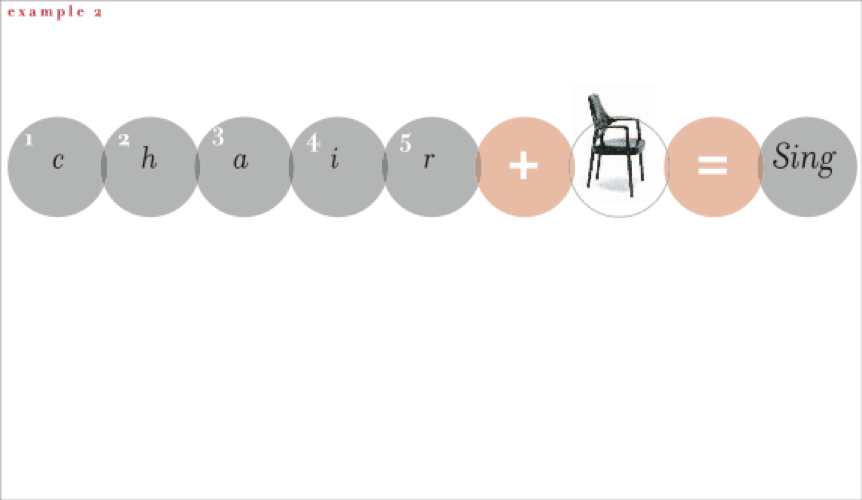
The signifier refers to the material form of the sign—what we hear (sound) or see (written mark). The signified refers to the concept that this sound or image evokes in our minds. For example, the word “CHAIR” has a signifier: the sequence of letters C-H-A-I-R arranged in that specific order. The concept that this sequence evokes—an object designed for sitting and resting—is the signified. The relationship between signifier and signified is arbitrary but culturally stabilized through convention.
For Christian Metz, however, cinema does not constitute a language in the strict linguistic sense, because it has not established minimal units comparable to those of verbal language. Nevertheless, cinema functions as a structured communicational system capable of producing meaning. Meaning in cinema does not arise from isolated minimal units, but from the organization and ordering of those units within a structure.
In cinematic discourse, the closest equivalent to a minimal unit is the shot. However, unlike the linguistic word, the shot does not carry a stable, intrinsic meaning in isolation. A conventional or unconventional shot of a chair, for example, does not inherently signify anything determinate. Its meaning emerges only when it is arranged within a sequence—through montage, contextual framing, or narrative positioning.
By contrast, the word “CHAIR,” even when presented alone, already activates a culturally stabilized concept. Thus, while linguistic units possess an internalized signifying function, cinematic units derive their meaning relationally, through structure and sequence.
(Example 2)
-
27
Saussure distinguished sharply between signs which constitute a langueand those that constitute a langage. It is Metz’s contention that film does not constitute a languein the strict sense of constituting a language system, but that it nevertheless qualifies as a langagein the looser sense of being a signifying practice characterized by recognizable ordering procedures. Cinema lacks the double articulation characteristic of natural language. The phonemes of natural language are basic, distinctive units of sound which do not themselves signify.
(Secuence>Structure>Language)
Film Theory and Criticism: Introductory Readings
by Leo Braudy, Marshall Cohen ↩︎ - 1
Summary of Saussure’s Structural Linguistics : The French linguist Ferdinand de Saussure studied language from a formal and theoretical point of view, i.e. as a system of signs which could be described synchronically (as a static set of relationships independent of any changes that take place over time) rather than diachronically (as a dynamic system which changes over time). ↩︎
Leave a Reply